

Learn how to setup your first Rust project powered by Appwrite.
Head to the Appwrite Console.
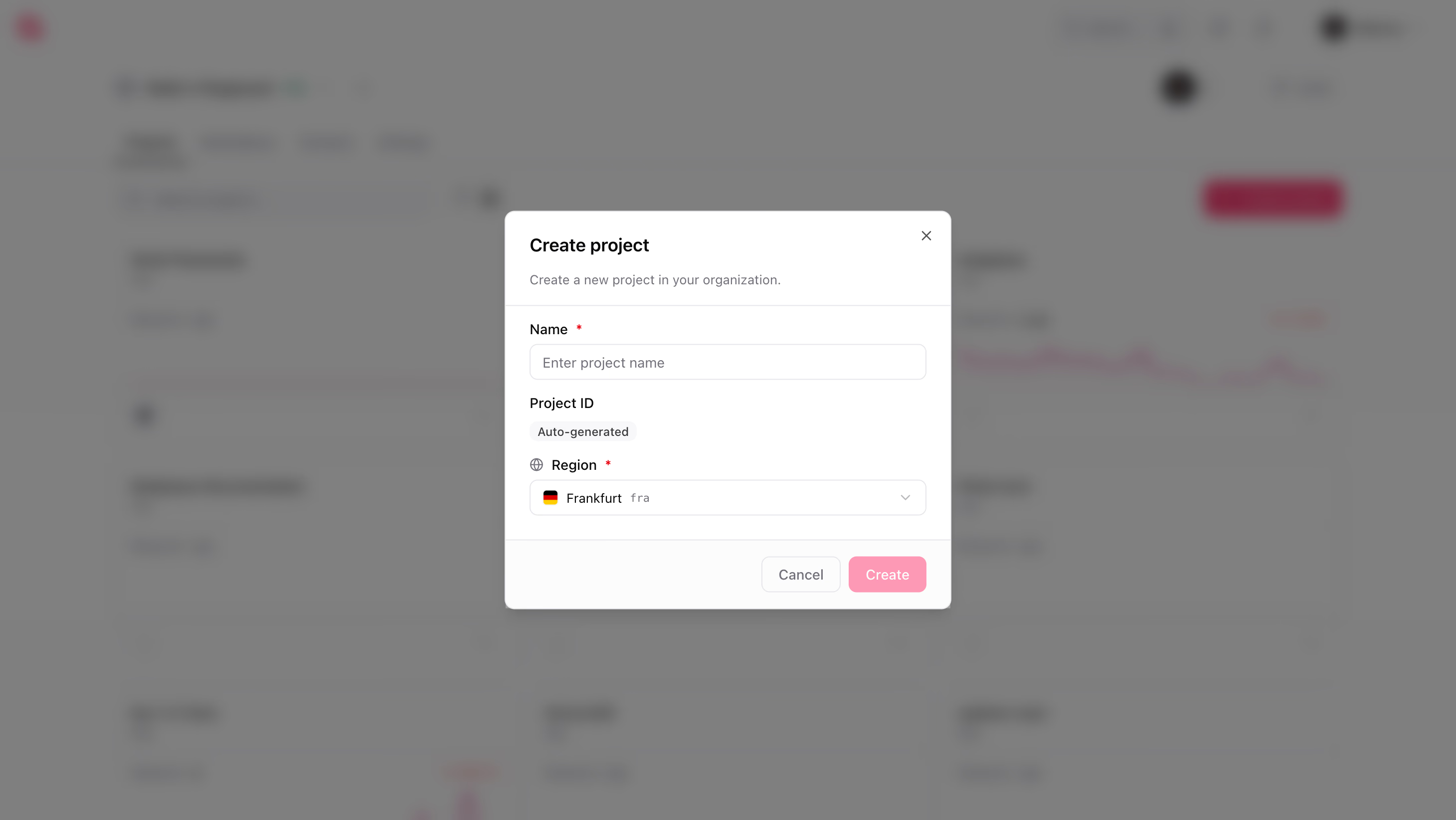
If this is your first time using Appwrite, create an account and create your first project.

Then, under Integrate with your server, add an API Key with the following scopes.


| Category | Required scopes | Purpose |
Database | databases.write | Allows API key to create, update, and delete databases. |
tables.write | Allows API key to create, update, and delete tables. | |
columns.write | Allows API key to create, update, and delete columns. | |
rows.read | Allows API key to read rows. | |
rows.write | Allows API key to create, update, and delete rows. |
Other scopes are optional.

Create a new Rust application.
cargo new my_app
cd my_app
Install the Rust Appwrite SDK and its dependencies.
cargo add appwrite
cargo add tokio -F full
cargo add serde_json
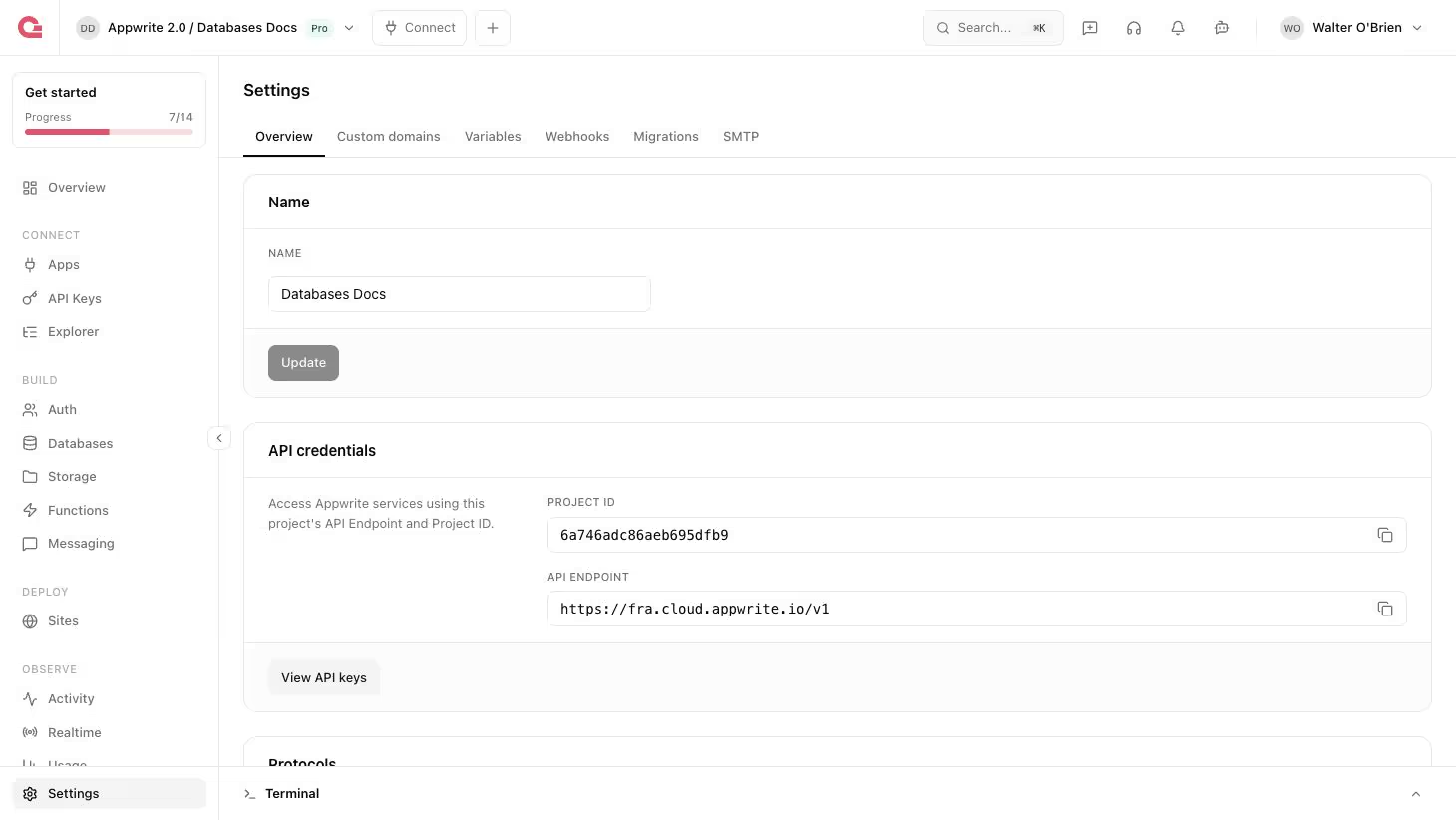
Find your project ID in the Settings page. Also, click on the View API Keys button to find the API key that was created earlier.
Open src/main.rs and initialize the Appwrite Client. Replace <PROJECT_ID> with your project ID and <YOUR_API_KEY> with your API key.
use appwrite::Client;
use appwrite::services::tables_db::TablesDB;
use appwrite::id::ID;
use serde_json::json;

#[tokio::main]
async fn main() -> Result<(), Box<dyn std::error::Error>> {
    let client = Client::new()
        .set_endpoint("https://<REGION>.cloud.appwrite.io/v1")
        .set_project("<PROJECT_ID>")
        .set_key("<YOUR_API_KEY>");

    Ok(())
}
Once the Appwrite Client is initialized, create a function to configure a todo table.
async fn prepare_database(
    tables_db: &TablesDB,
) -> Result<(String, String), Box<dyn std::error::Error>> {
    let todo_database = tables_db.create(
        ID::unique(),
        "TodosDB",
        None,
    ).await?;

    let todo_table = tables_db.create_table(
        &todo_database.id,
        ID::unique(),
        "Todos",
        None, None, None, None, None,
    ).await?;

    tables_db.create_varchar_column(
        &todo_database.id,
        &todo_table.id,
        "title",
        255,
        true,
        None, None, None,
    ).await?;

    tables_db.create_text_column(
        &todo_database.id,
        &todo_table.id,
        "description",
        false,
        Some("This is a test description."),
        None, None,
    ).await?;

    tables_db.create_boolean_column(
        &todo_database.id,
        &todo_table.id,
        "isComplete",
        true,
        None, None,
    ).await?;

    Ok((todo_database.id, todo_table.id))
}
Create a function to add some mock data into your new table.
async fn seed_database(
    tables_db: &TablesDB,
    database_id: &str,
    table_id: &str,
) -> Result<(), Box<dyn std::error::Error>> {
    tables_db.create_row(
        database_id,
        table_id,
        ID::unique(),
        json!({
            "title": "Buy apples",
            "description": "At least 2KGs",
            "isComplete": true
        }),
        None, None,
    ).await?;

    tables_db.create_row(
        database_id,
        table_id,
        ID::unique(),
        json!({
            "title": "Wash the apples",
            "isComplete": true
        }),
        None, None,
    ).await?;

    tables_db.create_row(
        database_id,
        table_id,
        ID::unique(),
        json!({
            "title": "Cut the apples",
            "description": "Don't forget to pack them in a box",
            "isComplete": false
        }),
        None, None,
    ).await?;

    Ok(())
}
Create a function to retrieve the mock todo data and execute the functions in main.
use appwrite::query::Query;

async fn get_todos(
    tables_db: &TablesDB,
    database_id: &str,
    table_id: &str,
) -> Result<(), Box<dyn std::error::Error>> {
    // Retrieve rows (default limit is 25)
    let todos = tables_db.list_rows(
        database_id,
        table_id,
        None, None, None, None,
    ).await?;

    println!("Todos:");
    for todo in &todos.rows {
        println!("Title: {}\nDescription: {}\nIs Todo Complete: {}\n",
            todo.get::<String>("title").unwrap_or_default(),
            todo.get::<String>("description").unwrap_or_default(),
            todo.get::<bool>("isComplete").unwrap_or_default(),
        );
    }

    // Use queries to filter completed todos with pagination
    let completed_todos = tables_db.list_rows(
        database_id,
        table_id,
        Some(vec![
            Query::equal("isComplete", true).to_string(),
            Query::order_desc("$createdAt").to_string(),
            Query::limit(5).to_string(),
        ]),
        None, None, None,
    ).await?;

    println!("Completed todos (limited to 5):");
    for todo in &completed_todos.rows {
        println!("Title: {}\nDescription: {}\nIs Todo Complete: {}\n",
            todo.get::<String>("title").unwrap_or_default(),
            todo.get::<String>("description").unwrap_or_default(),
            todo.get::<bool>("isComplete").unwrap_or_default(),
        );
    }

    // Query for incomplete todos
    let incomplete_todos = tables_db.list_rows(
        database_id,
        table_id,
        Some(vec![
            Query::equal("isComplete", false).to_string(),
            Query::order_asc("title").to_string(),
        ]),
        None, None, None,
    ).await?;

    println!("Incomplete todos (ordered by title):");
    for todo in &incomplete_todos.rows {
        println!("Title: {}\nDescription: {}\nIs Todo Complete: {}\n",
            todo.get::<String>("title").unwrap_or_default(),
            todo.get::<String>("description").unwrap_or_default(),
            todo.get::<bool>("isComplete").unwrap_or_default(),
        );
    }

    Ok(())
}
Make sure to update main() with the functions you created. Your main() function should look something like this:
use appwrite::Client;
use appwrite::services::tables_db::TablesDB;
use appwrite::id::ID;
use appwrite::query::Query;
use serde_json::json;

#[tokio::main]
async fn main() -> Result<(), Box<dyn std::error::Error>> {
    let client = Client::new()
        .set_endpoint("https://<REGION>.cloud.appwrite.io/v1")
        .set_project("<PROJECT_ID>")
        .set_key("<YOUR_API_KEY>");

    let tables_db = TablesDB::new(&client);

    let (database_id, table_id) = prepare_database(&tables_db).await?;
    seed_database(&tables_db, &database_id, &table_id).await?;
    get_todos(&tables_db, &database_id, &table_id).await?;

    Ok(())
}
Run your project with cargo run and view the response in your console.